Four Weeks Building Crash the Cooler
Introduction: The Juggling Act
Welcome to the final reflection of this four-week journey. Balancing my coursework here at Full Sail University with running Serenity Marketing Agency right here in Lake County, Florida, and managing my team at Love In the Name of Christ is always a juggling act, but this month’s content campaign project was incredibly rewarding. For my case study, I chose Bloom Nutrition—specifically Bloom Sparkling Energy.
The "Crash the Cooler" Concept
My core argument heading into the project was simple: Bloom doesn't have an awareness problem; it has a sameness problem. They have massive reach, but their feed is flooded with tens of thousands of affiliates posting the exact same flavor-demo video template. To disrupt this, I developed "Crash the Cooler," a creator-made comedy video contest inspired by Doritos' legendary "Crash the Super Bowl" campaigns. Independent creators submit short-form videos, the public votes, and the winner receives a cash prize along with their video becoming Bloom's official paid creative for the quarter. The only rule? The energy drink can cannot be the punchline.
Executing the Four-Week Sprint
Building this campaign required a strict, phased approach. Week one involved diving deep into the brand with a discovery post and an APA-referenced infographic. In week two, I benchmarked against heavy hitters like Liquid Death, Olipop, and Red Bull to justify leaning into creator-made short-form video. Week three brought it all together with a comprehensive creative brief, a 30-day Instagram Reels content calendar, and 30 unique captions. Finally, in week four, I delivered a fully narrated pitch presentation and a storyboard built from meticulously cited, licensed stock photography.
Strengths and Skill Growth
Stepping back, two distinct strengths anchored my success in this project. First, my experience directing staff and coordinating logistics in our junk removal and thrift operations translates directly into solid project management—keeping this rapid four-week timeline on track was second nature. Second, my daily work consulting for local businesses at Serenity has honed my ability to spot strategic gaps in a market, which is exactly how I pinpointed Bloom’s "sameness" issue.
At the same time, I leveled up my content creation skills in two specific areas. While I usually rely on my standard CapCut workflow for editing, building a static storyboard with licensed stock photography forced me to think more critically about visual sequencing before a single frame is ever recorded. Additionally, writing 30 distinct, engaging Instagram captions pushed me far beyond my usual copywriting limits, teaching me how to sustain a brand voice at volume.
Conclusion: Taking It Forward
Ultimately, this project reinforced that great digital marketing is where structure meets disruption. Moving forward in my career, I will take this lesson with me: massive reach is meaningless if the message blends in. Whether I’m pitching a national beverage brand or building a localized campaign for an agency client, I now have the framework to confidently pitch bold, creator-driven concepts that shatter the status quo.
Content generated using AI (Gemini, Google).
Part Two: My Revision
Four weeks ago I picked Bloom Sparkling Energy as my case study brand because I assumed the interesting problem would be a creative one. It turned out to be a structural one. Coming up with Crash the Cooler — a creator-made comedy video contest where the rule is that the can can’t be the punchline — took an afternoon. Keeping that idea intact across four deliverables took the rest of the month. That is the actual lesson of this course for me, and it is not the one I expected walking in. An idea does not survive on its own. Every document you write after the idea is a chance for it to drift, and drift never announces itself.
Two things I did well. The first is that I check my own work against the record instead of against my memory. Partway through the project I went back through my earlier posts and found that my creative brief had been built around a campaign name I had abandoned two weeks before. Nobody was going to catch that but me, and I only caught it because I reread the old post instead of trusting what I remembered writing. The same instinct saved me on sourcing. I scrapped a reference list because it had URLs in it I had not personally opened. If the link doesn’t load, it doesn’t go in the document. That isn’t really a research skill. It’s a refusal to sign my name to something I can’t verify, and it is the thing that keeps a marketer from putting a number in a client deck that turns out to be wrong.
The second is that I think about what a thing costs to make. I run a small agency and I run a crew at a nonprofit that moves furniture, and in both places you ship with what you actually have. When my storyboard needed images, I didn’t hand-wave it — I rebuilt the whole thing with licensed stock and cited every image, because that is what the real version would require. My instructor framed the prototype as a way to surface production problems before anyone commits budget, and that framing matched how I already think. A concept that can’t be produced isn’t a concept. It’s a mood board.
Two places I got better. The first is distribution. I came into this course thinking about content and left thinking about the calendar. Building thirty days of Instagram posts forced me to answer “what goes out on day seventeen” thirty separate times, and there is no faking that. Thirty captions is where you find out whether your campaign has thirty things to say or one thing to say thirty times. Bloom’s problem was always the second one. Writing my own calendar was the first time I felt that problem from the inside instead of diagnosing it from the outside.
The second is sourcing and rights. Before this course I understood APA as a formatting chore. I understand it now as a chain of custody. There is a real difference between a claim and a citable claim, and the gap between the two is where a brand gets into trouble — a statistic nobody can source, an image you don’t have the rights to, a health claim in a comedy script nobody briefed. During week two a classmate asked how Bloom would keep compliance on scripts it didn’t write. I didn’t have a good answer then. I have one now, and it’s boring: you document everything, and you don’t publish what you can’t back up.
If any of this is useful to somebody working through the same four weeks, three things helped. Keep one page that states the campaign name, the thesis, the channel, and the one creative rule, and read it before you submit anything — that page is what catches drift. When a template or a platform won’t let you do what you planned, and mine wouldn’t take TikTok, don’t argue with it. Find the closest structural equivalent and rewrite your reasoning honestly. Instagram Reels carried the same format and the post is stronger for having to defend the switch. And open every link in your reference list before you turn it in, every time.
What I take forward is narrower than I expected and more useful for being narrow. Not “be creative.” Creativity was the cheap part of this project. The expensive part was making every choice traceable to a reason I could point at — why this channel, why this format, why this rule, why this source. That is what turns a good idea into something a client will actually fund. It is also, as it happens, the part I could not get a machine to do for me.
Content generated using AI (Gemini, Google) and revised by the author (Andre Keegan)
Part Three: Observations on Voice
Reading the two versions back to back, the difference isn’t quality. The AI draft is grammatical, well organized, and says nothing false. The difference is that the AI version could have been written about any student, any brand, any four weeks. There is not a single proper noun in it. Mine has a furniture crew, a scrapped reference list, a platform that wouldn’t take TikTok, and day seventeen of a calendar. That is the whole gap. A language model produces something close to the average of everything ever written on a subject, and the average is by definition what everyone else already sounds like.
For a business, that is an expensive risk rather than a stylistic one. Brand voice is a differentiator only for as long as it is not the category default. Nearly nine in ten B2B marketers now use AI tools to generate or optimize written copy (Content Marketing Institute, 2026), so the category-average voice is not hypothetical — it is what most competitors are already publishing. A brand that runs its content through a general model and posts what comes back gets the same voice its competitors get from the same tool. That is precisely the problem I spent four weeks diagnosing at Bloom: enormous reach spending itself on content nobody can tell apart. Brand story is worse, because story is built out of the things only that company knows. The Bang Energy detail in my week two post came from a job I worked, not from a dataset. No model has it, and no prompt can retrieve it.
The market appears to have worked this out already. Ahrefs analyzed 900,000 newly created web pages and found that 74.2% contained some AI-generated text, but only 2.5% were pure AI with no human editing at all; the remaining 71.7% were a blend (Law, 2025). Nearly three quarters of the new web is AI-touched and almost none of it is AI-finished. The editing layer is where the differentiation lives, which tracks with a second Ahrefs study finding no meaningful correlation between how much AI text a page contains and where it ranks (Ahrefs, 2026). Nobody is being punished for using the tool. They are being punished for publishing the unedited output.
The clearest strength I found is speed on structure. AI is genuinely good at scaffolding — outlines, first-draft skeletons, and volume variation. Producing thirty distinct Instagram captions by hand is a slow afternoon; as a drafting pass it takes minutes, and I still rewrote most of them. That is a real hour-for-hour gain on work that was never the creative part to begin with.
The clearest weakness is that it cannot tell the difference between a source and a plausible-looking source. Earlier in this project I had to throw out a reference list because it contained URLs that were formatted correctly, looked exactly right, and did not resolve. Confident and well formatted is what makes that failure dangerous. A bad citation in a client deck is a credibility problem you do not get a second chance to explain. And running the output through a detector is not a fix: a Stanford research team found that widely used GPT detectors routinely misclassify human writing as machine-generated and can be defeated by simple prompting (Liang et al., 2023). Verification has to be human, and it has to be manual. That is the job the tool gave back to me, not the one it took away.
References
Ahrefs. (2026). Google doesn’t punish AI content; it punishes bad content (331k pages studied). https://ahrefs.com/blog/google-doesnt-punish-ai-content/
Content Marketing Institute. (2026). B2B content and marketing trends: Insights for 2026. https://contentmarketinginstitute.com/b2b-research/b2b-content-marketing-trends-research
Google. (2026). Gemini [Large language model]. https://gemini.google.com
Law, R. (2025). 74% of new webpages include AI content (study of 900k pages). Ahrefs. https://ahrefs.com/blog/what-percentage-of-new-content-is-ai-generated
Liang, W., Yuksekgonul, M., Mao, Y., Wu, E., & Zou, J. (2023). GPT detectors are biased against non-native English writers. Patterns, 4(7). https://www.cell.com/patterns/fulltext/S2666-3899(23)00130-7
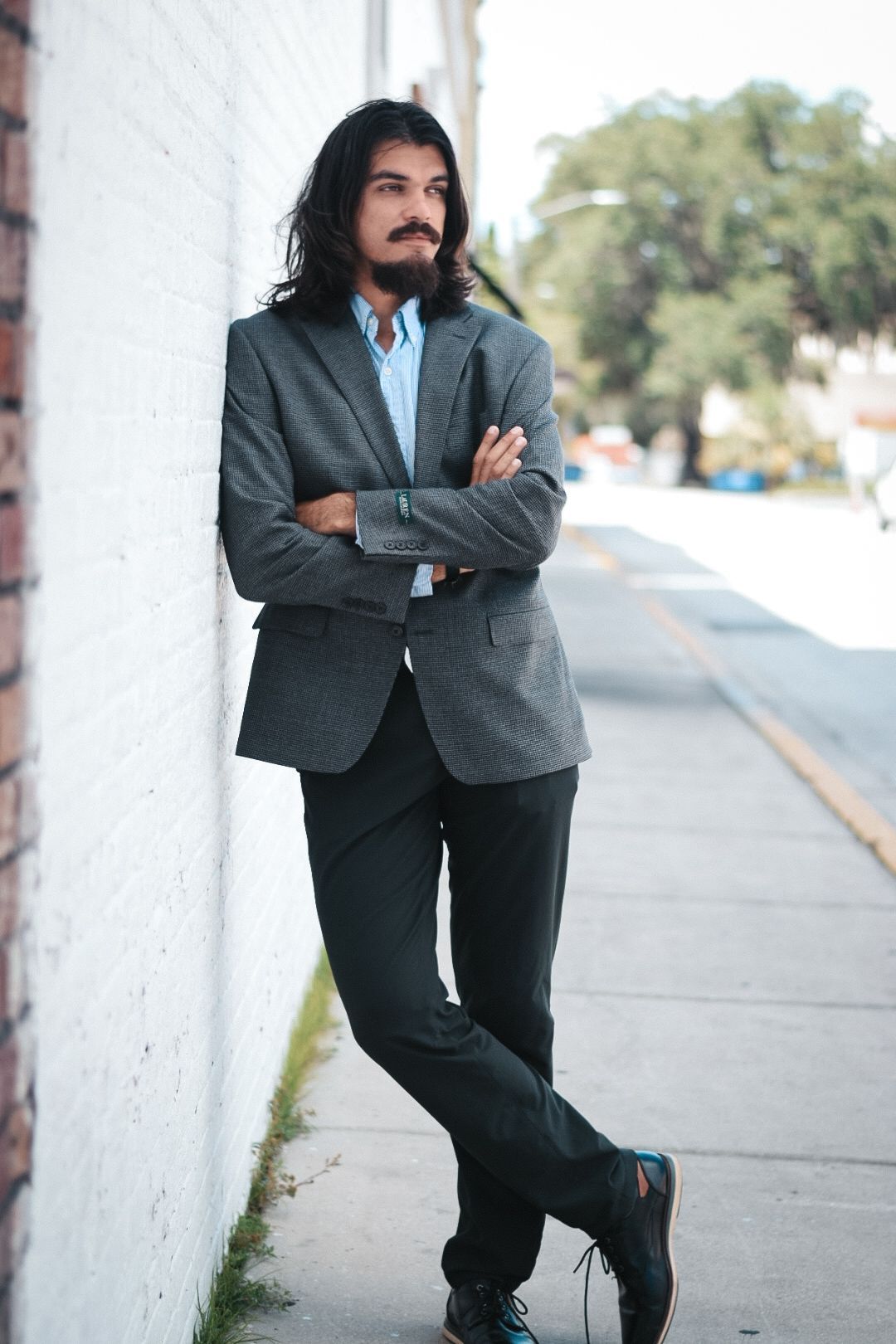
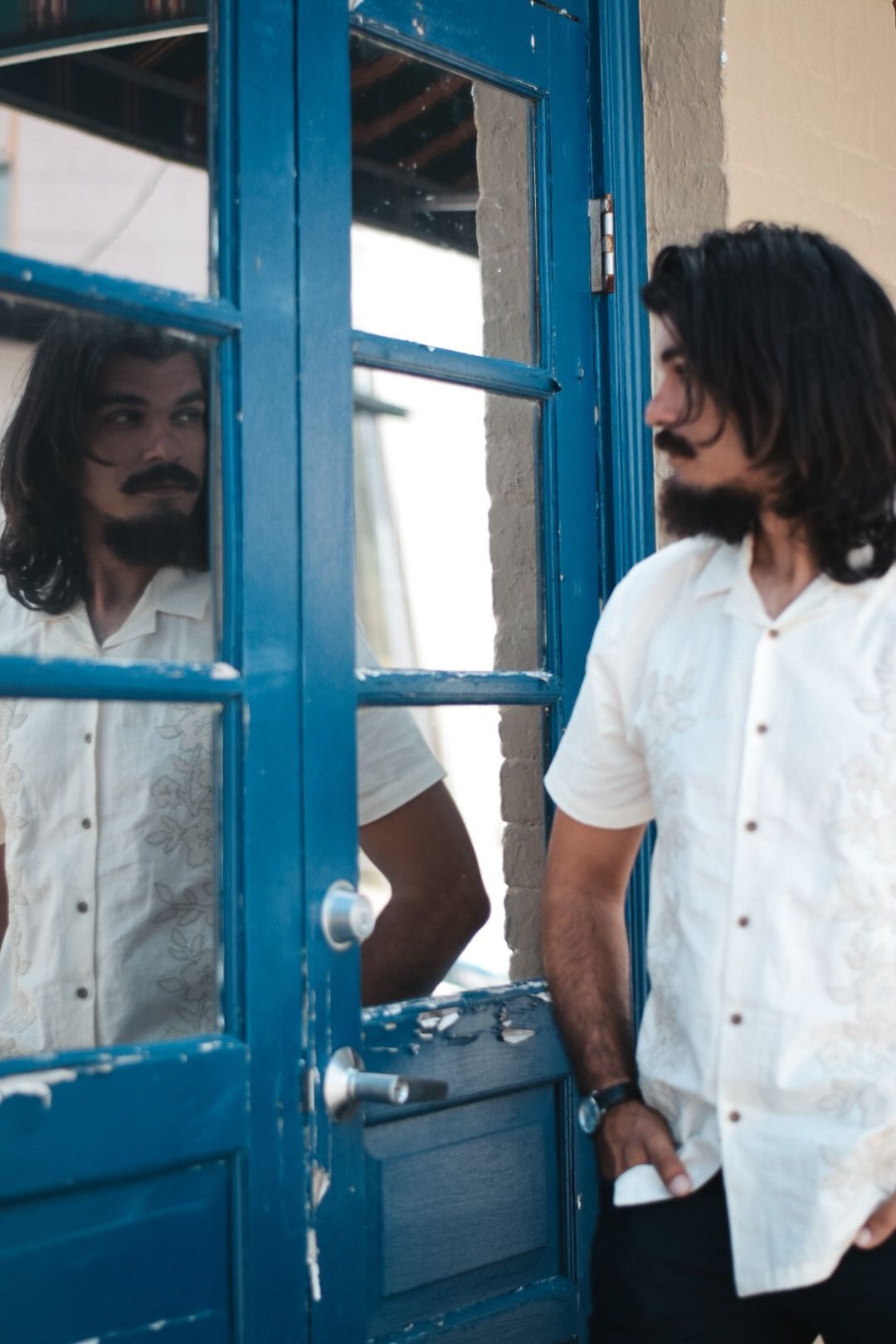
Photography credit: Liv Rae Photography.



This is a subtitle for your new post

The body content of your post goes here. To edit this text, click on it and delete this default text and start typing your own or paste your own from a different source.